
This blog is a part of a larger project associated with scholarsofthethrone.com. Visit our site for more information.
Ned, Cersei, and Foucault
This week the Scholars of the Throne took on the last for episodes of Game of Thrones, Season 1 (7-10). Upon re-watching these episodes, I could not help but think about all the ways that Ned Stark could have approached "the game" differently, potentially leading to a different set of results (i.e. keeping his head and protecting his family).

In exploring ideas about Ned, I could not help but think about Michel Foucault. Foucault had really interesting thoughts on power and I think his ideas shed a lot of light on the power dynamics at play in GoT. Foucault believes that "power is not something that is acquired, seized, or shared, something that one holds on to or allows to slip away; power is exercised from innumerable points, in the interplay of non egalitarian and mobile relations" (Foucault 94). Many of the characters in GoT participate in some form of this complex power dynamic. The potential to exercise power is everywhere and exists with everyone in this series. For some characters this exercising of power is physical in nature (e.g. The Mountain, Bronn, etc.) but for many, power is exercised via mental maneuvering (quite literally playing politics) and these particular power plays are largely dependent upon what certain characters know, when they know it, and how (and when) they use that knowledge.

It is here that I would, again like to return to Foucault, who understood that knowledge and power are interrelated. Those who have or gain knowledge gain the potential to exert power over those who lack knowledge. Similarly, divulging knowledge (or confessing) one's knowledge can negatively affect one's ability to exercise power. I would also contend that choosing when to divulge knowledge can also be seen as an exercising of power but choosing to divulge at the wrong time can shift power out of one's favor.

For Ned Stark, I am of the opinion that his fate becomes (mostly) sealed in the moment that he confesses to Cersei that he "know[s] the truth Jon Arryn died for" ("You Win or You Die"). Ned confesses this revelation to Cersei as a means of honoring his own integrity. Ned wants to allow Cersei a chance to escape the kingdom before he reveals her indiscretions to King Robert, a revelation that would undoubtedly cause Robert to condemn her (and possibly her progeny) to death. However, Ned unwittingly gives Cersei the upper hand by revealing his knowledge of her children's paternal origins. Although Ned has given her the chance to escape, she seems to disregard his advice and stays put because she understands that this move has shifted the power dynamic in her favor. Although the passing of time in the television series (and even the novels) is not entirely straight-forward, the novel indicates that there has been some amount of time between Ned's meeting with Cersei and Robert's return from his hunting trip, stating Cersei "had lingered too long already" after being warned of Ned's information and his intention to reveal it to Robert (Martin 423).
Of course, it is heavily implied, and in the book made quite explicit, that Robert was never meant to survive the hunting trip, but had Ned chose to stay quiet about his revelation regarding Cersei's children until Robert's return or at least acted on Robert's behalf and had Cersei (and the children) held under suspicion of her crime, he may have been able to use this knowledge to more adequately exercise power over the situation. The fact that Ned revealed his hand too early and to Cersei, no less, ultimately undermined his ability to exercise power. Instead, by virtue of revealing knowledge to Cersei, Ned unwittingly allowed her to arrange her own exercising of power over Ned and the court by seating Joffrey on the throne immediately following Robert's death and arranging to have Lannister forces on hand to seize the castle (and Ned) before he can exert any further power over the kingdom. I cannot help but think that Cersei's swift action was made with all the more urgency as a result of feeling threatened by Ned's possible reveal of her indiscretion PRIOR to Joffrey's ascent to the throne.

Ned's mistakes regarding timing continue after Robert returns from his hunting trip. Ned, who again attempts to live honorably and with compassion, spares Robert in his last moments of the upsetting news regarding his wife and "children." It is hard not to wonder how things would have turned out differently had Ned made the choice to throw compassion to the wind and reveal the truth to Robert (preferably in the company of additional witnesses who might have ensured that Robert's punitive requests were seen through). Because Ned has no allies who know the truth and no direct orders specifically regarding Cersei's indiscretion, Ned's accusations after Robert's death appear to be nothing more than political posturing by another player in the "Game of Thrones",
Knowledge/Power Cont.
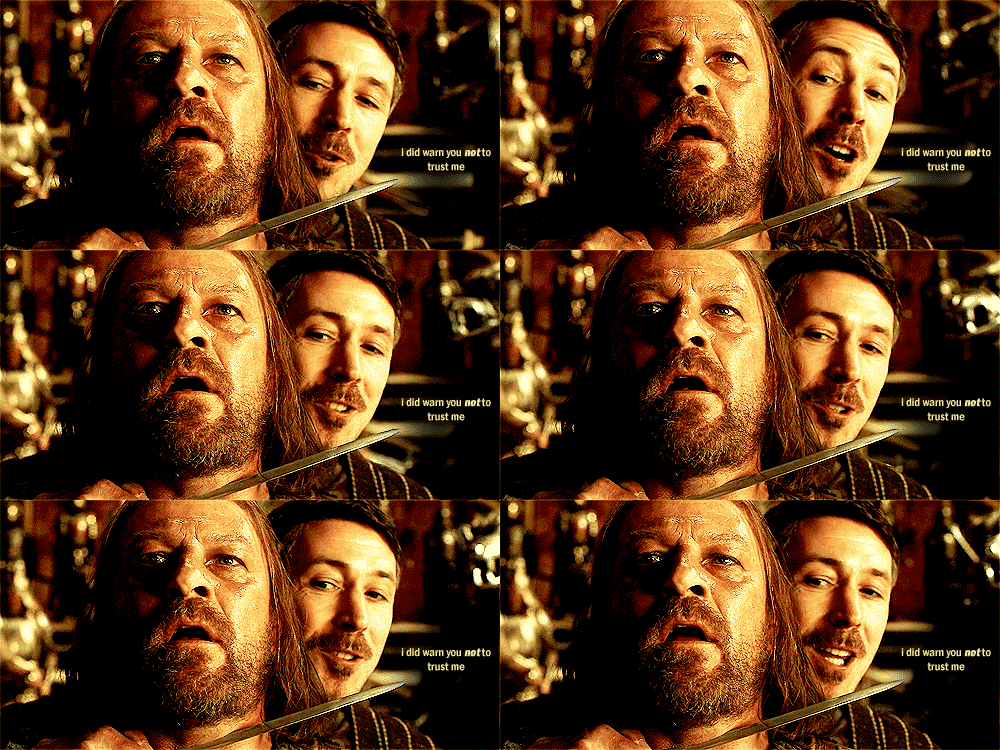
Even moving beyond this instance of Ned and Cersei, one can see that there are many other characters that are able to exercise power as a result of knowledge. Petyr "Littlefinger" Baelish and Lord Varys are two individuals that seem to understand the implications of this Foucauldian paradigm of knowledge and power. These two characters even have several individuals throughout the kingdom working for them as spies, who are able to feed them information which they are later able to use in power plays. In fact, it is implied that these characters knew the truth of Joffrey's origins long before Ned. The difference, of course, is that these two understood the value of the information they had and were wise enough to keep it to themselves. Well....at least until the it would have served them to reveal it to their own ends. Clearly, neither of these characters is afflicted with the morality that drives Ned to unwisely surrender the means (i.e. information) by which he might otherwise be able to exercise power.

Summing it up...
Clearly Cersei was telling the truth when she said "when you play the game of thrones you win or you die" ("You Win or You Die"). One really has to have a mind for the game, which Ned's morality clearly prevented him from having. So...unfortunately for poor Ned...well... he died.


References
Foucault, Michel. The History of Sexuality: An Introduction, Volume 1. Trans. Robert Hurley. New York: Pantheon, 1978. Print.
Martin, George R.R. A Game of Thrones. New York: Bantam, 2013. Print.
"You Win or You Die." Game of Thrones: Season 1. Writ. David Benioff and D.B. Weiss. Dir. Daniel Monacan. HBO, 2011. Xfinity OnDemand. 6 February 2016.
_________________________________________________________________________________
ADVERTISEMENT
Ned, Cersei, and Foucault
This week the Scholars of the Throne took on the last for episodes of Game of Thrones, Season 1 (7-10). Upon re-watching these episodes, I could not help but think about all the ways that Ned Stark could have approached "the game" differently, potentially leading to a different set of results (i.e. keeping his head and protecting his family).

In exploring ideas about Ned, I could not help but think about Michel Foucault. Foucault had really interesting thoughts on power and I think his ideas shed a lot of light on the power dynamics at play in GoT. Foucault believes that "power is not something that is acquired, seized, or shared, something that one holds on to or allows to slip away; power is exercised from innumerable points, in the interplay of non egalitarian and mobile relations" (Foucault 94). Many of the characters in GoT participate in some form of this complex power dynamic. The potential to exercise power is everywhere and exists with everyone in this series. For some characters this exercising of power is physical in nature (e.g. The Mountain, Bronn, etc.) but for many, power is exercised via mental maneuvering (quite literally playing politics) and these particular power plays are largely dependent upon what certain characters know, when they know it, and how (and when) they use that knowledge.

It is here that I would, again like to return to Foucault, who understood that knowledge and power are interrelated. Those who have or gain knowledge gain the potential to exert power over those who lack knowledge. Similarly, divulging knowledge (or confessing) one's knowledge can negatively affect one's ability to exercise power. I would also contend that choosing when to divulge knowledge can also be seen as an exercising of power but choosing to divulge at the wrong time can shift power out of one's favor.

For Ned Stark, I am of the opinion that his fate becomes (mostly) sealed in the moment that he confesses to Cersei that he "know[s] the truth Jon Arryn died for" ("You Win or You Die"). Ned confesses this revelation to Cersei as a means of honoring his own integrity. Ned wants to allow Cersei a chance to escape the kingdom before he reveals her indiscretions to King Robert, a revelation that would undoubtedly cause Robert to condemn her (and possibly her progeny) to death. However, Ned unwittingly gives Cersei the upper hand by revealing his knowledge of her children's paternal origins. Although Ned has given her the chance to escape, she seems to disregard his advice and stays put because she understands that this move has shifted the power dynamic in her favor. Although the passing of time in the television series (and even the novels) is not entirely straight-forward, the novel indicates that there has been some amount of time between Ned's meeting with Cersei and Robert's return from his hunting trip, stating Cersei "had lingered too long already" after being warned of Ned's information and his intention to reveal it to Robert (Martin 423).
Of course, it is heavily implied, and in the book made quite explicit, that Robert was never meant to survive the hunting trip, but had Ned chose to stay quiet about his revelation regarding Cersei's children until Robert's return or at least acted on Robert's behalf and had Cersei (and the children) held under suspicion of her crime, he may have been able to use this knowledge to more adequately exercise power over the situation. The fact that Ned revealed his hand too early and to Cersei, no less, ultimately undermined his ability to exercise power. Instead, by virtue of revealing knowledge to Cersei, Ned unwittingly allowed her to arrange her own exercising of power over Ned and the court by seating Joffrey on the throne immediately following Robert's death and arranging to have Lannister forces on hand to seize the castle (and Ned) before he can exert any further power over the kingdom. I cannot help but think that Cersei's swift action was made with all the more urgency as a result of feeling threatened by Ned's possible reveal of her indiscretion PRIOR to Joffrey's ascent to the throne.

Ned's mistakes regarding timing continue after Robert returns from his hunting trip. Ned, who again attempts to live honorably and with compassion, spares Robert in his last moments of the upsetting news regarding his wife and "children." It is hard not to wonder how things would have turned out differently had Ned made the choice to throw compassion to the wind and reveal the truth to Robert (preferably in the company of additional witnesses who might have ensured that Robert's punitive requests were seen through). Because Ned has no allies who know the truth and no direct orders specifically regarding Cersei's indiscretion, Ned's accusations after Robert's death appear to be nothing more than political posturing by another player in the "Game of Thrones",
Knowledge/Power Cont.
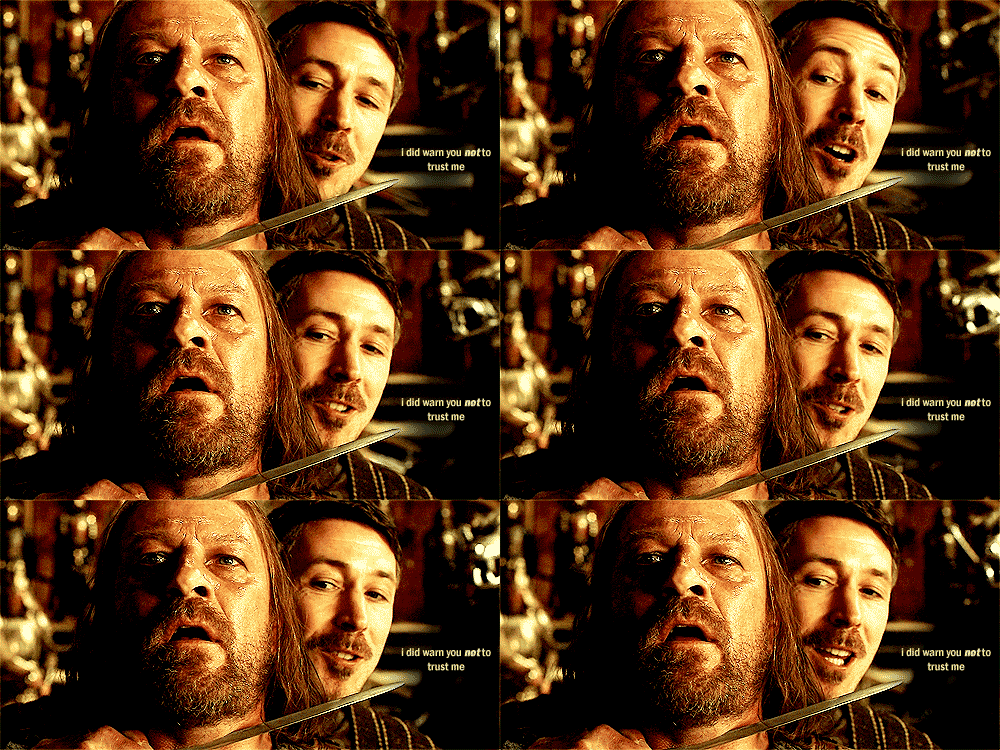
Even moving beyond this instance of Ned and Cersei, one can see that there are many other characters that are able to exercise power as a result of knowledge. Petyr "Littlefinger" Baelish and Lord Varys are two individuals that seem to understand the implications of this Foucauldian paradigm of knowledge and power. These two characters even have several individuals throughout the kingdom working for them as spies, who are able to feed them information which they are later able to use in power plays. In fact, it is implied that these characters knew the truth of Joffrey's origins long before Ned. The difference, of course, is that these two understood the value of the information they had and were wise enough to keep it to themselves. Well....at least until the it would have served them to reveal it to their own ends. Clearly, neither of these characters is afflicted with the morality that drives Ned to unwisely surrender the means (i.e. information) by which he might otherwise be able to exercise power.

Summing it up...
Clearly Cersei was telling the truth when she said "when you play the game of thrones you win or you die" ("You Win or You Die"). One really has to have a mind for the game, which Ned's morality clearly prevented him from having. So...unfortunately for poor Ned...well... he died.


References
Foucault, Michel. The History of Sexuality: An Introduction, Volume 1. Trans. Robert Hurley. New York: Pantheon, 1978. Print.
Martin, George R.R. A Game of Thrones. New York: Bantam, 2013. Print.
"You Win or You Die." Game of Thrones: Season 1. Writ. David Benioff and D.B. Weiss. Dir. Daniel Monacan. HBO, 2011. Xfinity OnDemand. 6 February 2016.
_________________________________________________________________________________
ADVERTISEMENT


